

"People are credulous creatures who find it very easy to believe and very difficult to doubt," the psychologist Daniel Gilbert wrote in a 1991 American Psychologist article, and the 2026 midterms are the first American election in which campaigns have had the tools to put that observation to work at scale.
One week before the November 3 general election, the Wesleyan Media Project has counted 220 ads built at least in part with AI, carrying more than $137 million in spending (against less than $50,000 in AI ad spending for the entire 2024 cycle). Synthetic video persuades even when it is labeled or plainly absurd, and the law governing these ads is thinner than most people assume, which leaves campaigns, their vendors, and the candidates they target with specific work to do in the final stretch.
Seeing Is Still Believing, Even When the Ad Says Otherwise
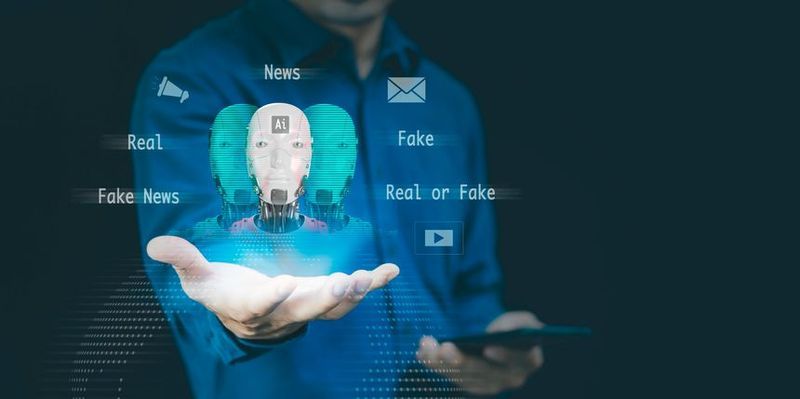
Communication researchers have a name for the instinct Gilbert described: the realism heuristic, which is the mental shortcut that treats video as a window onto events rather than an argument about them. Penn State's S. Shyam Sundar and his co-authors found that a fabricated story delivered by video was judged more credible, and was more likely to be shared, than the identical story told in text or audio, and Sundar has warned that deepfakes are "so clever, it's very hard for the human eye to discern." Public polling points the same way: 28% of Americans told Quinnipiac in March that they had shared a video they later learned was AI-generated.
Some researchers argue that the feared wave of deceptive deepfakes has not arrived, and that most of this cycle's AI content is closer to caricature, which NYU's Scott Babwah Brennen called "AI-generated slopaganda."
The North Carolina state Senate race between Jessica Bichler and Sen. Michael Lee shows why that distinction offers less comfort than it seems. Lee's ad depicted an AI-generated Bichler, who owns a yoga studio, twisting into poses no human body could hold, and it carried an AI disclaimer that Lee defended on the ground that voters "are smart enough to spot comedy and obvious parody." Bichler nonetheless told NPR that supporters asked her how Lee had gotten into her studio and why she had agreed to be filmed, which suggests that neither a label nor an impossible image fully overrides the instinct to believe footage of a real person's face and body.
The Ads Are Everywhere, and Both Parties Are Using Them
Wesleyan found AI-generated ads in 34 states, and only 27% of them carried any disclaimer, which co-director Erika Franklin Fowler attributed to the fact that "much of the AI use is not disclosed through any type of disclaimer." Republican candidates and groups sponsored 81% of the ads Wesleyan counted and accounted for 88% of the spending, while Democratic sponsors accounted for 12%.
But the tactic is not confined to one side of the aisle. In Texas, Ken Paxton's Senate campaign ran an ad in which an AI-rendered version of his Democratic opponent, James Talarico, who studied at a Presbyterian seminary, is shown editing the Bible, which Talarico dismissed as a deepfake. Meanwhile, on October 23, Mississippi Attorney General Lynn Fitch asked Democratic Senate candidate Scott Colom's campaign to take down AI ads depicting Sen. Cindy Hyde-Smith (R) running from reporters, citing the state's digitization statute, Miss. Code § 97-13-47.
The Law Is a State Patchwork That Courts Keep Narrowing
No federal statute addresses AI in political advertising. The Federal Election Commission declined to open a rulemaking in 2024 and instead adopted an interpretive rule confirming that its fraudulent-misrepresentation provision is "technology neutral," but that provision reaches only misrepresentations of who is speaking on behalf of a campaign, not deceptive depictions generally. The Federal Communications Commission's February 2024 ruling that AI-generated voices are "artificial" under the TCPA covers voice-cloned robocalls, and it does not reach television or online ads.
That leaves the states, where over 30 have enacted political deepfake laws, according to the National Conference of State Legislatures. Most require disclosure rather than prohibiting synthetic content outright, while a few, including Texas within 30 days of an election and Maryland even for labeled content, go further. Louisiana's June 2026 statute excludes federal candidates entirely and treats a clear AI warning as compliance.
The First Amendment is the principal constraint on all of these laws. A federal court in California struck down two of that state's statutes in Kohls v. Bonta, a Hawaii disclosure law was permanently enjoined in Babylon Bee v. Lopez, and a federal judge in Montana enjoined that state's law on September 16, although only as to the two plaintiffs who sued. Even where a statute survives, enforcement moves more slowly than a campaign, as Colorado illustrates, because the first complaint filed under its disclosure law is not set for hearing until November 17, two weeks after the votes are cast.
The Platforms Move Faster Than Courts, With Fewer People Watching
If the courts are slow, the platforms are the obvious alternative, but in recent years Meta, X, and YouTube have cut the trust-and-safety teams they had expanded after the 2020 election and now lean on automated moderation and crowdsourced notes. Their election rules are also narrow. Meta's ad rules make political advertisers say when they used AI, and its systems tag images whose C2PA provenance data shows they were machine-made, while X relies largely on Community Notes. YouTube removes content that misleads voters about when, where, or how to vote, and officials and other public figures can ask it to take down AI-generated videos that falsely portray them, but for most other content its approach is to point viewers to election boards and news outlets through information panels rather than to remove videos.
Former Facebook engineer Frances Haugen identified a weakness in content-based enforcement: an operative "can just keep tweaking the post a little bit each time you create them, and some of them are going to get through." Researchers at the Digital Democracy Institute of the Americas added that enforcement is thinner outside English, and they traced a false rumor about Talarico's health picked up by conservative Spanish-language outlets.
If You Are the One Being Faked
With days left before the election, no court order is likely to arrive in time, so a candidate depicted in a synthetic ad should work the faster channels. Capture every version of the clip, with URLs, timestamps, and any Spanish-language reposts, because altered copies slip past a single takedown and the record will matter later. Report the ad through each platform's own process, since Meta rejects political ads that fail to disclose AI, Google has removed a PAC ad that lacked a disclosure, and YouTube takes likeness-removal requests from public figures. Where a state statute applies, a short demand to the sponsoring campaign, or a complaint to the attorney general, can move faster than any lawsuit, as Mississippi suggests, where the Colom video appeared to come down the afternoon the attorney general asked. Defamation, false light, and right of publicity claims will still be available after November 3.
The Bottom Line
The audience is primed to believe: Research on the realism heuristic and voters' own admissions both indicate that synthetic video persuades even when it is labeled or implausible, which means disclosure alone will not settle the harm.
The rules are local and contested: With no federal standard and courts trimming state statutes on First Amendment grounds, compliance depends on a state-by-state analysis that may change between now and the next cycle.
The law will arrive after the votes are counted: Because enforcement trails the campaign calendar, the practical remedies before November 3 are platform policies, which are narrower and less staffed than in past cycles, takedown demands, and the common law torts that predate AI entirely.
For questions about AI in political advertising and election law compliance, please contact the Jones Walker Privacy, Data Strategy and Artificial Intelligence team. Stay tuned and subscribe for continued insights from the AI Law and Policy Navigator.
Twenty-eight percent of Americans have shared a video they later learned was AI-generated. -- Quinnipiac
-
- name
- Andrew R. Lee
- title
- Partner
- phones
- D: 504.582.8664
- alee@joneswalker.com