

Accessibility of Web Content and Mobile Applications: How the ADA Title II Final Rule Applies to Municipal Pension Plans
Background and Legal Framework
On April 24, 2024, the US Department of Justice (DOJ) published a final rule in the Federal Register amending its regulations implementing Title II of the Americans with Disabilities Act (ADA). This rule establishes, for the first time, specific and enforceable technical standards governing the accessibility of digital services provided by state and local governments, including websites and mobile applications.
Title II of the ADA has long required that public entities ensure that individuals with disabilities are not excluded from participation in, or denied the benefits of, governmental services, programs, or activities. The Final Rule clarifies and ensures people with disabilities have access to state and local governments’ services, programs, and activities available on digital services, including websites and mobile apps.
Technical Standard for Compliance
The Final Rule adopts the Web Content Accessibility Guidelines (WCAG) Version 2.1, Level AA, which sets a specific technical standard that state and local governments must follow to meet their existing obligations under Title II of the ADA for digital accessibility.
This standard applies broadly to:
-
Websites and web-based services
-
Mobile applications
-
Electronic documents (including PDFs, Word, and Excel files)
-
Multimedia content (audio and video)
-
Online forms and public digital materials
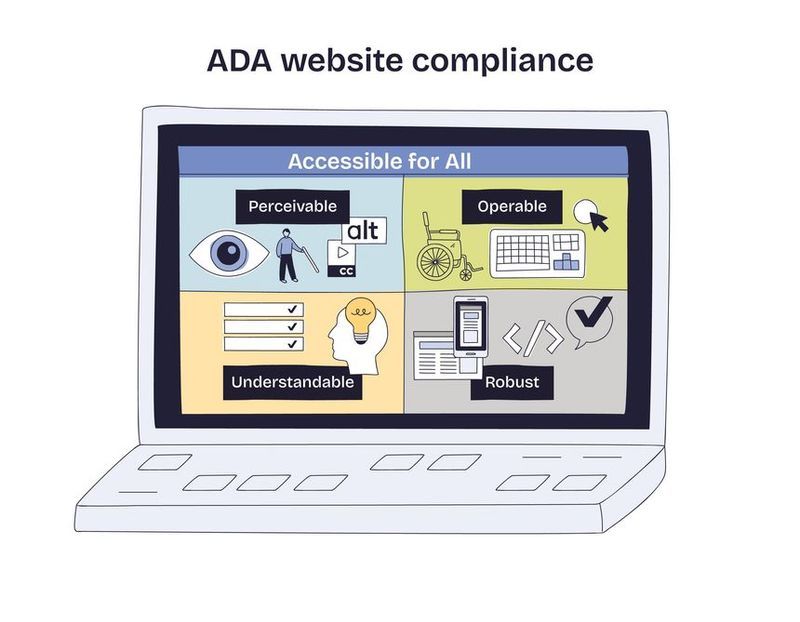
WCAG 2.1 Level AA includes detailed technical criteria designed to ensure accessibility for individuals with visual, auditory, cognitive, and mobility impairments.
These requirements include, among other things:
-
Text alternatives for images (alt text)
-
Captioning for audio and video content
-
Keyboard navigability
-
Readable document structure for assistive technologies
-
Adequate contrast and formatting for readability
As a practical matter, this standard applies to most documents and materials routinely posted electronically by pension plans, including agendas, minutes, board packets, actuarial reports, and other publicly available documents.
Entities Subject to the Rule
The Final Rule applies to all “public entities” under Title II, including:
-
State and local governments
-
Departments, agencies, and special purpose districts
-
Instrumentalities of public entities
Municipal pension plans are considered agencies of a public entity and therefore fall within the scope of the rule.
Compliance Deadlines
The applicable compliance deadline is based on the population of the local government associated with the pension plan. The population is generally determined using US Census data for the relevant local government.
Updated Deadlines (DOJ Interim Rule - April 2026):
-
For pension plans where the local government population is greater than 50,000, the compliance deadline is April 26, 2027.
-
For pension plans, or any special district government, where the local government population is less than 50,000, the compliance deadline is April 26, 2028.
In an abundance of caution, we recommend using the total population of the sponsoring municipality/local government as the measure for determining the applicable compliance date.
Scope of Required Compliance
Public entities must ensure that all web content and mobile applications conform to WCAG 2.1 Level AA, unless the entity can demonstrate that compliance would result in a fundamental alteration of the service, program, or activity; or impose an undue financial or administrative burden. The public entity has the burden of proof that compliance would result in such alterations or burdens.
Additionally, the rule allows for a “conforming alternate version” of a separate web page that meets the WCAG 2.1 Level AA only where technical or legal limitations prevent direct compliance; and the alternate version provides equivalent information and functionality as the inaccessible web page, is equally up to date, and is at least as accessible as the non-conforming content.
The rule also includes several narrow exceptions, including: Archived web content not currently used; certain preexisting electronic documents; content posted by third parties (in limited circumstances); password-protected individualized documents; and preexisting social media posts.
Recommendations and Implementation Guidance
-
Immediate Compliance Planning: All pension plans should begin working toward compliance well in advance of the applicable deadline. This includes identifying all digital content subject to the rule and assessing current accessibility issues.
-
Website and Document Management: For pension plans that maintain websites, all newly posted content must meet WCAG 2.1 Level AA requirements; existing content should be evaluated and corrected, where required; and particular attention should be given to board materials, reports, and PDFs, which present the most common compliance risks.
-
Vendor Coordination: Because many pension plans rely on third-party vendors (e.g., actuaries, administrators, investment consultants), vendors should be notified of these requirements immediately, all future documents should be required in ADA-compliant formats, and contracts and engagement letters should include explicit accessibility obligations.
-
Risk Mitigation: If compliant technology or processes are not yet in place, pension plans should consider delaying the posting of new documents on the plan’s website until they can be made compliant and temporarily limiting website content to essential information (Plan name and Public Records Custodian name and contact).
-
Coordination with Plan Sponsor: Pension plans should work closely with their plan sponsor’s IT department to implement existing accessibility tools and ensure that either the Plan sponsor will have software in place, or the vendors will provide the pension plan with compliant documents.
Conclusion
The DOJ’s 2024 Final Rule represents a significant shift in ADA enforcement by establishing clear standards for digital accessibility. Compliance is not optional, and failure to meet these requirements may expose public entities to ADA enforcement actions and litigation. Pension boards should treat this as a priority and begin implementation efforts accordingly.
-

- name
- Pedro A. Herrera
- title
- Partner
- phones
- D: 305.679.5738
- pherrera@joneswalker.com
-

- name
- Madison Levine
- title
- Special Counsel
- phones
- D: 305.679.5706
- mlevine@joneswalker.com