

Your Next Data Breach May Start With a Job Interview: The Deepfake Candidate Problem
The scenario sounds like science fiction: a candidate aces a video interview, clears a background check, and starts work only to deploy malware on day one. But it’s already happening. Gartner projects that by 2028, one in four candidate profiles worldwide will be fake. The FBI has documented over 300 US companies that unknowingly hired North Korean operatives using stolen identities and AI-generated personas. And the tools enabling this fraud are getting cheaper and more convincing by the month.
For employers, the question is no longer whether synthetic identity fraud will affect hiring. It’s whether your current verification processes can detect it, and what liability you face when they don’t.
The Agentic AI Problem: When Bots Transact With Bots
Experian’s 2026 Future of Fraud Forecast identifies “machine-to-machine mayhem” as this year’s leading threat. The concern isn’t simply that fraudsters use AI. It’s that autonomous AI agents now initiate transactions, access systems, and make decisions with minimal human oversight. When something goes wrong, determining who authorized what becomes genuinely unclear.
This creates practical problems for employers deploying agentic tools:
Authorization gaps. If your AI procurement agent executes a purchase order, did a human authorize that specific transaction? Your contract may say yes; the facts may say no.
Credential inheritance. An AI agent operating with an employee’s credentials can bind your organization to commitments that employee never reviewed.
Audit trail fragmentation. When AI agents interact with vendor AI agents, reconstructing what happened (and why) becomes forensic archaeology.
The uncomfortable reality: many organizations have deployed agentic AI capabilities without updating their authorization frameworks, vendor contracts, or incident response procedures to account for autonomous action.
Deepfake Hiring Fraud: A Compliance Failure Waiting to Happen
Employment fraud has moved from theoretical risk to documented enforcement priority. The Department of Justice announced coordinated actions in June 2025 against North Korean IT worker schemes, including searches of 29 laptop farms across 16 states. The FBI’s guidance now explicitly warns that these operatives “use AI and deepfake tools to obfuscate their identities” during interviews.
The legal exposure runs in two directions, and employers are caught in the middle:
Negligent hiring liability. Traditional doctrine holds employers responsible when they “knew or should have known” of employee unfitness at the time of hire. Given public FBI warnings and widespread media coverage, courts may conclude that employers should have known synthetic identity fraud was possible and should have implemented verification controls accordingly. Hiring a deepfake candidate who then accesses customer data or financial systems creates exactly the kind of foreseeable harm that supports negligent hiring claims.
The irony is not lost on the industry: in July 2024, KnowBe4, a cybersecurity firm specializing in security awareness training, discovered that a newly hired software engineer who had passed background checks, verified references, and four video interviews was actually a North Korean operative using stolen US credentials and an AI-enhanced photo. The company's endpoint detection software flagged malware being loaded onto the worker's laptop within hours of delivery.
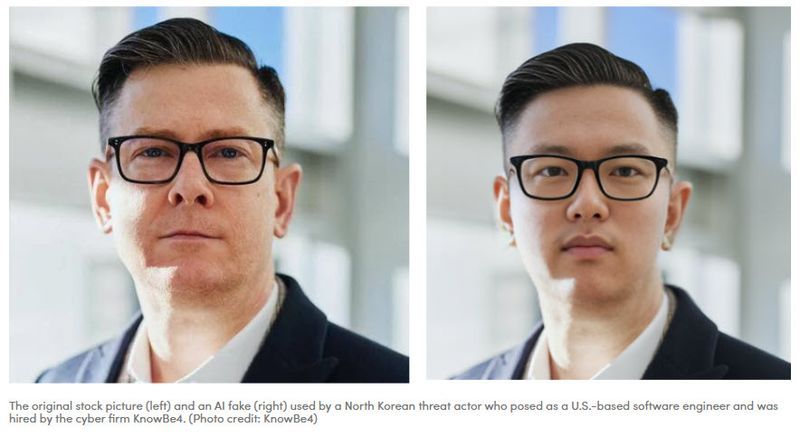
Disparate impact from verification tools. Here’s the catch: the facial recognition and liveness detection technologies that detect deepfakes carry documented bias risks. The FTC’s Rite Aid enforcement action found the company’s AI surveillance system “falsely flagged consumers, particularly women and people of color.” Deploy anti-deepfake screening without bias testing, and you may trade fraud risk for Title VII exposure.
What “Reasonable” Controls Actually Look Like
The FTC hasn’t issued agentic AI-specific guidance, but the Rite Aid settlement offers the clearest blueprint for what regulators expect. The FTC characterized the case as demonstrating “the need to test, assess, and monitor the operation of those systems.”
Translated into employer obligations, “reasonable” means:
Test before you deploy. Rite Aid’s core failure was implementing facial recognition without assessing its accuracy or demographic performance. Any identity verification system, whether for detecting deepfakes or screening AI agent actions, requires documented pre-deployment testing.
Monitor after you deploy. Accuracy degrades. Deepfake technology improves. A system that worked six months ago may fail today. Ongoing monitoring with documented results isn’t optional; it’s what distinguishes defensible programs from negligent ones.
Train your people. Technology generates alerts; humans make decisions. Employees who act on AI-generated flags without understanding the risks of false positives expose themselves to liability. The Rite Aid order specifically required employee training on system limitations.
Vet your vendors. Rite Aid deployed the technology despite its vendor’s express statement disclaiming “any warranty as to the accuracy or reliability of the product.” That disclaimer didn’t protect Rite Aid from FTC enforcement. Your vendor’s limitations become your legal exposure.
The State Law Patchwork: Gaps That Matter
Over 45 states now have deepfake legislation, but the coverage creates a false sense of security. Pennsylvania criminalizes fraudulent deepfakes. Tennessee protects voice cloning rights. California provides damages for deepfake pornography. Notice what’s missing? No state specifically addresses deepfake employment fraud. If a synthetic identity candidate infiltrates your workforce, you’re relying on general fraud statutes never designed for this scenario.
Building a Defensible Verification Program
The goal isn’t perfect detection; it’s documented reasonableness. If deepfake fraud occurs despite good-faith controls, your defense depends on showing what you did and why it was reasonable at the time.
Layer your identity verification. Document authentication at application, biometric liveness detection during interviews, and re-verification at offer stage. Simple techniques (asking candidates to reposition cameras, perform unpredictable actions, or verify against independent data sources) disrupt current deepfake technology without sophisticated tooling.
Establish human checkpoints. The EU AI Act’s August 2026 deadline mandates human oversight for high-risk employment AI. Even if you’re not subject to EU jurisdiction, “human-in-the-loop” for consequential hiring decisions is becoming the baseline expectation.
Test for bias before deployment. California’s Fair Employment regulations mandate documented bias testing. Even outside California, conducting and documenting EEOC four-fifths rule analysis for any facial recognition or biometric system creates an affirmative defense.
Restrict agentic AI access. Prohibit unsupervised AI agent access to financial systems, customer data, or regulated information until your authorization and audit frameworks catch up with the technology.
Preserve your evidence. California requires four-year retention for data from automated decision systems. Maintain AI system inventories, vendor due diligence records, impact assessments, and human override logs. The documentation you create today becomes your litigation defense tomorrow.
Three Key Takeaways:
The “should have known” standard is shifting. Given FBI warnings and industry coverage of synthetic identity fraud, employers without verification controls face negligent hiring exposure that didn’t exist two years ago.
Anti-fraud tools create their own risks. Facial recognition and liveness detection technologies carry bias exposure. Deploy without testing and documentation, and you may replace fraud liability with discrimination liability.
Documentation is your defense. When deepfake fraud or agentic AI incidents occur, your legal position depends on showing what reasonable steps you took. Build the record now.
For questions about employment verification, AI governance frameworks, and fraud prevention controls, contact the Jones Walker Privacy, Data Strategy, and Artificial Intelligence team. Stay tuned for continued insights from the AI Law and Policy Navigator.
-

- name
- Andrew R. Lee
- title
- Partner
- phones
- D: 504.582.8664
- alee@joneswalker.com
-

- name
- Jeffery L. Sanches, Jr.
- title
- Associate
- phones
- D: 504.582.8544
- jsanches@joneswalker.com