

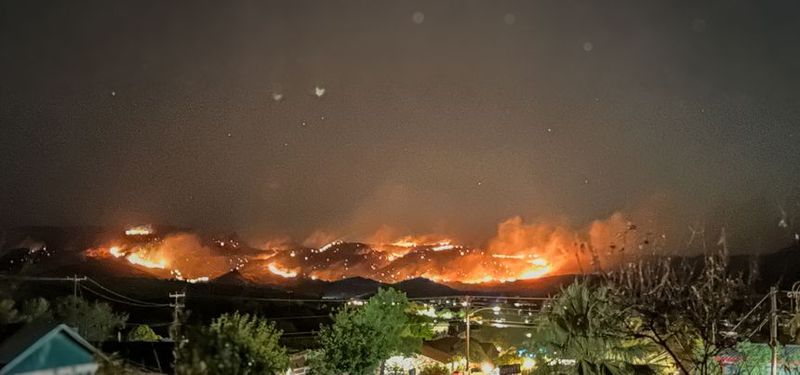
Wildfire is no longer a remote, seasonal risk. The State of Wildfires 2024–2025 report discusses how changes in climate are increasing the frequency and intensity of extreme wildfires globally, while the 2024–2025 season brought severe events from South America and Canada to Southern California.
In July 2026, France and Spain evacuated more than 300,000 people (and counting); Canada’s 2023 fires burned more than 15 million hectares; Southern California’s January 2025 Eaton and Palisades fires caused 150,000 evacuations and an estimated $140 billion in damage; and Hawaii’s Lahaina Fire destroyed more than 2,000 structures.
Evolving Standards to Manage the Risks of Wildfires
For property owners, contractors, and risk managers, the practical lesson is that resilience starts before the first spark. Many homes are destroyed by wind-borne embers rather than direct flame contact, so the building envelope matters: Class A or noncombustible roofs, debris-resistant noncombustible gutters, ember- and flame-resistant vents, enclosed soffits and eaves, ignition-resistant siding such as fiber cement, stucco, masonry, or brick veneer, and dual-pane tempered or fire-rated glazing. For commercial and multifamily buildings, the same principles scale into exterior wall assemblies, protected openings, fire-rated doors, and carefully detailed roof-wall-deck interfaces.
Materials alone are not enough. Defensible space — specially a noncombustible 0-to-5-foot “Zone 0” around the structure — helps keep vegetation, fences, stored materials, and other fuels from becoming a fuse. Code development is moving in the same direction: the International Wildland-Urban Interface Code supplements the International Building Code for WUI buildings, while the Insurance Industry Institute for Business and Home Safety has proposed a model ordinance for baseline, enhanced, and optimum tiers that addresses ember defense, vents, walls, windows, roofs, and defensible space. The US Department of Energy has published design guidelines for wildfire resistance.
Newer construction tools can make these measures more reliable. Building Information Modeling can serve as a shared source of project information and support constructability, simulation, planning, clash detection, and virtual construction coordination. Modular and prefabricated construction can shift work into controlled factory settings, supporting shorter schedules, cost effectiveness, and quality control when envelope details are properly coordinated.
The goal is not to make buildings “fireproof,” but to buy time: fewer ignition pathways, slower fire spread, safer evacuation, and a better chance that a structure is still standing when the fire front passes.
-

- name
- Bruce D. Partington
- title
- Partner
- phones
- D: 448.239.6465
- D: 850.214.5100
- bpartington@joneswalker.com