

Prediction Markets Offer Wagering Opportunities on Transfer Portal Despite Questionable Legality of Product
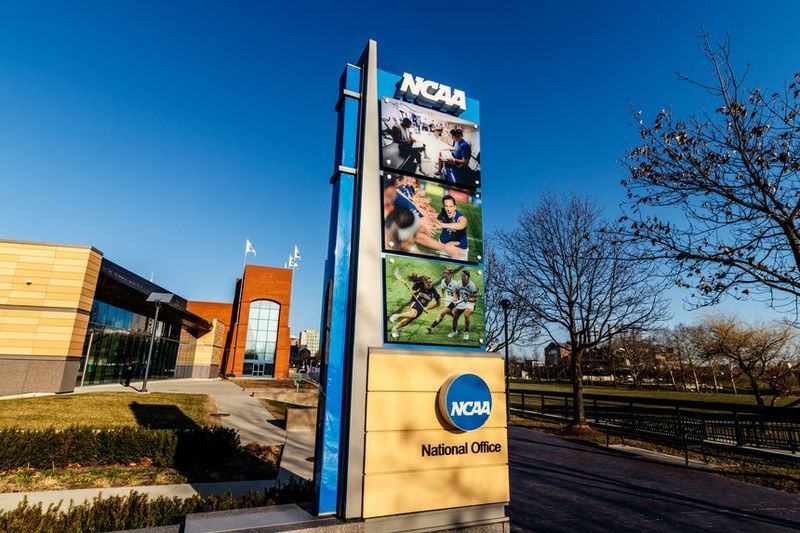
The prediction market industry's aggressive expansion into college sports has reached a new threshold, with attention on the area amplified by Kalshi's recent notification to the Commodity Futures Trading Commission (CFTC) that it intends to self-certify markets on whether NCAA Division I athletes will enter the transfer portal. The development drew sharp criticism from the NCAA which has raised serious questions about both the legality of such offerings and their potential to harm student-athletes and competitive integrity.
On December 17, 2025, Kalshi triggered the recent public backlash by submitting filings to the CFTC based on contracts titled "Will [player] enter/withdraw from the transfer portal in time period?" and “Will [player] transfer to [team] in [time period]?” According to the filing, contracts would be resolved based on public announcements from players on social media, athletic departments, agents, recruiting services, or major sports media outlets. Notably, the contracts would settle as "yes" even if a player subsequently changed his or her mind about entering the portal.
The backlash was swift and predictable. NCAA President Charlie Baker issued a statement characterizing the proposal as unacceptable, noting that student-athletes already face harassment and abuse for lost bets on game performance. Baker emphasized that transfer portal betting would place greater pressure on student-athletes while threatening competition integrity and recruiting, and criticized prediction markets as operating in an unregulated marketplace.
The backlash against Kalshi’s filing came at an inopportune moment for the company. Prediction markets and their supporters were emboldened by an April 2025 preliminary injunction from a Nevada federal court that allowed Kalshi to continue offering sports event contracts in that state, and a subsequent preliminary procedural victory in New Jersey. These temporary victories contrasted an unfavorable outcome in Maryland district court. However, in late November 2025, Judge Gordon reversed course in the Nevada federal case, finding that Kalshi "relies on a strained reading of the already convoluted Commodities Exchange Act (CEA) in an attempt to evade state regulation" in lifting the temporary injunction shielding it from action by Nevada’s regulators.
The court dissolved the preliminary injunction, and subsequently denied Kalshi's emergency motion for a stay, leaving the company vulnerable to enforcement action in Nevada while it pursues an appeal to the Ninth Circuit to coincide with its appeal of the Maryland decision in the Fourth Circuit and the regulator’s appeal of the New Jersey decision in the Third Circuit. Gordon's ruling represents a significant shift in the legal landscape by flipping Kalshi from appellee to appellant in the topical cases pending federal appellate review. The judge determined that Kalshi's interpretation "would require all sports betting across the country to come within the jurisdiction of the CFTC rather than the states and Indian tribes," an outcome that would "upset decades of federalism regarding gaming regulation" and run contrary to Congressional intent.
Beyond the legal challenges to Kalshi's nationwide operations, critics allege that transfer portal betting presents integrity concerns that distinguish it from traditional sports wagering. Unlike betting on game outcomes, opponents argue that transfer decisions involve a wide circle of individuals with access to material nonpublic information well before any public announcement occurs. Kalshi's own filings acknowledge this challenge by listing extensive trading prohibitions covering athletes, coaches, athletic staff, agents, NIL representatives, attorneys, NCAA employees with portal database access, university administrators, recruiting service employees, and immediate family members of those within these these categories. Critics charge that this risk of direct manipulation distinguishes transfer portal betting from traditional game wagering, where outcomes depend on athletic performance rather than individual business decisions susceptible to financial inducement.
Additionally, pursuant to the House settlement that went into effect in July 2025, many college athletes are now under contract with their respective universities. To the extent Kalshi calls into question whether such athletes will abide by the terms of those contracts, it presents questions and risks relating to potential claims of tortious interference with those contracts. If a university sees that a player it has under contract is even listed on a prediction market, pre-litigation actions could commence.
The transfer portal controversy fits within Kalshi's broader strategy of pushing regulatory boundaries. Judge Gordon noted in his November ruling that since receiving the initial preliminary injunction, Kalshi had significantly expanded its offerings to include prop-style markets "such as prop bets on things like whether a team will score a touchdown…or the point total over/under on a game" — precisely the types of markets the company had previously suggested would be inappropriate. While Kalshi issued a statement indicating it has "no immediate plans to list these contracts," though it notably stopped short of abandoning the concept entirely. The company pointed out that competitors already offer similar markets and emphasized that it frequently self-certifies markets that don’t get listed. As such, Kalshi’s decision this week not to list these markets this week has little practical effect on the landscape, as neither the existence nor the expansion of transfer portal-based gambling markets face serious regulatory scrutiny despite the public outcry against them.
What remains clear is that the prediction market industry's expansion into college sports has reached a point where serious questions about regulatory adequacy, competitive integrity, and student-athlete welfare can no longer be dismissed as hypothetical concerns. The transfer portal betting controversy may well prove to be the catalyst that forces federal and state policymakers to address the prediction market industry on a wider scale than through piecemealed letters and litigation.
-

- name
- William D. Hall, III
- title
- Partner
- phones
- D: 850.214.5095
- whall@joneswalker.com
-

- name
- Daniel J. McGinn
- title
- Special Counsel
- phones
- D: 850.214.5105
- dmcginn@joneswalker.com