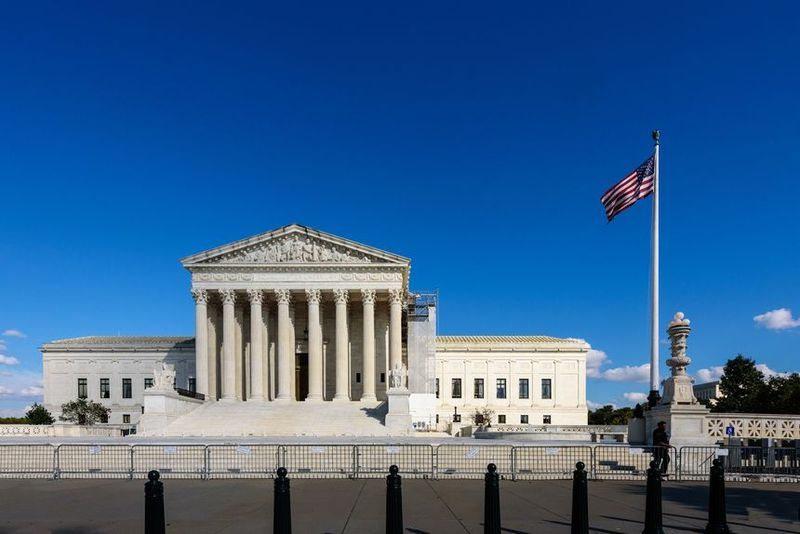

U.S. Supreme Court Holds IEEPA Does Not Authorize Presidential Tariffs
The U.S. Supreme Court issued a 6–3 decision today holding that the International Emergency Economic Powers Act (“IEEPA”) does not authorize the President to impose tariffs. Learning Resources, Inc. v. Trump (24-1287).
IEEPA allows the President to block, prohibit, or restrict certain foreign‑related transactions in response to an “unusual and extraordinary” foreign threat declared as a national emergency. Relying on that authority, the Trump Administration imposed a series of tariffs in 2025 to address what it identified as two such threats: the influx of illegal drugs from Canada, Mexico, and China, and significant trade imbalances.
The Court concluded that IEEPA does not extend to tariff authority. The majority emphasized that tariff‑setting is a core congressional taxing power, that IEEPA contains no explicit delegation of that authority, and that the statute cannot be read to authorize sweeping, open‑ended tariffs with broad economic impact.
Although the majority did not address remedies, Justice Kavanaugh’s dissent noted that the ruling may require the United States to refund billions of dollars in duties collected under the IEEPA tariffs.
The refund process remains uncertain. However, in a December 2025 decision, the Court of International Trade cited a Department of Justice briefing stating that the government would not oppose refunds of IEEPA‑imposed duties if courts ultimately found the tariffs unlawful. AGS Co. Auto. Sols. v. U.S. Customs, 2025 Ct. Int’l Trade LEXIS 158, at 5–8 (Dec. 15, 2025). If the government maintains this position, refunds may proceed in an orderly manner, though the volume of duties collected since 2025 may lead to administrative delays.